Search engine optimization (SEO) has moved from a nice-to-have to a default line item in most marketing budgets. Around 74% of small businesses now invest in SEO, and it’s easy to see why — a majority of online experiences still begin with a search engine. Keyword choice is still critical to your site’s success, but the science of ranking on Google has changed enormously since SEO first became a buzzword.
What Is Search Engine Optimization, Really?
Search engine optimization is the ongoing practice of shaping a website’s code, content, and structure so search engines can find it, understand it, and want to show it to their users for relevant queries. This is what’s meant by search engine ranking, position, or placement — where your page lands for the terms your customers actually search. Our search engine optimization (SEO) team builds this into every website we design, rather than treating it as an afterthought once a site goes live.
How Google Actually Ranks Websites Today
The one thing that hasn’t changed since the earliest days of SEO is this: you have to actually get people to your website for it to help your business. What has changed is how search engines decide who deserves that traffic. Google now weighs Core Web Vitals — page speed, visual stability, and responsiveness — alongside backlinks, structured data (schema markup), and mobile-first indexing, meaning Google evaluates the mobile version of your site first. Google also rewards genuine expertise and trustworthy content, an idea it calls E-E-A-T, which is why thin or generic pages tend to fall behind well-researched, specific content.
Having a website online is still not enough on its own. Good SEO focuses on bringing high-quality, targeted traffic to your site, and search engines still want to know what your pages are actually about, so they can show them to the right searchers.
What About Yahoo and MSN?
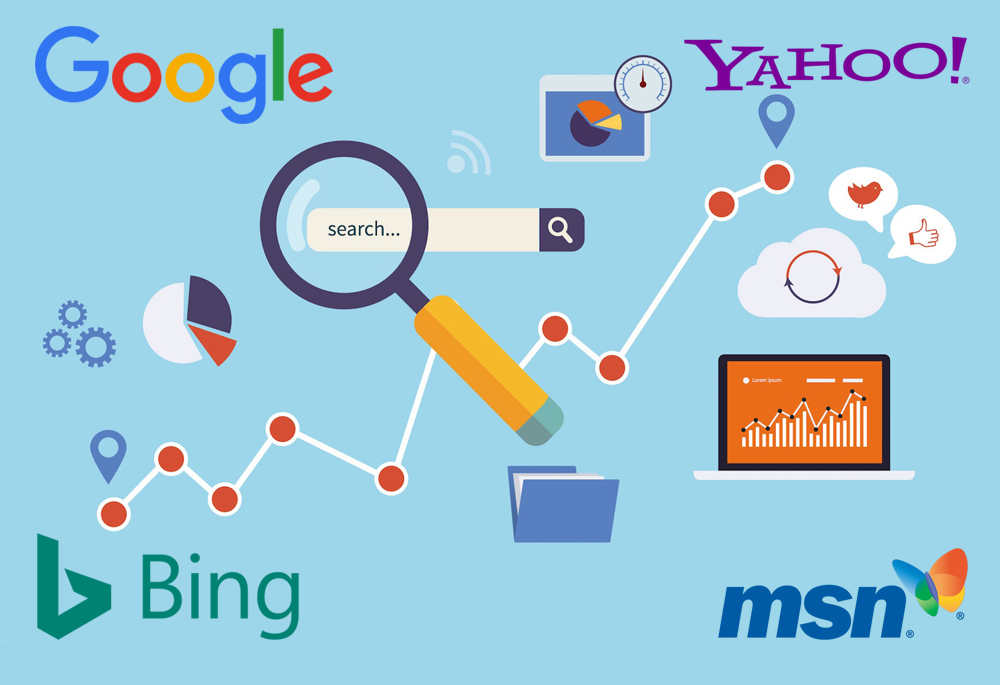
If you’ve been in business a while, you may remember optimizing for Google, Yahoo, and MSN separately. That’s largely history now: MSN Search was rebranded Bing back in 2009, and Yahoo’s own organic search results have been powered by Bing since 2010. In practice, most of the world’s search traffic today runs through two engines — Google, holding around 90% of the global market, and Bing (which also powers Yahoo), at a little under 5%. For most Indian and international businesses, a strong SEO strategy built around Google will largely carry over to Bing and Yahoo too, since the ranking signals — quality content, backlinks, technical health, mobile-friendliness — are broadly similar across all three.
Practical Steps to Climb the Rankings
Some fundamentals from the early days of SEO are still exactly right. Get your website copy sorted — to the point, snappy, with real impact, and it should actually ask the potential customer for their business. Build your site with a clear hierarchy and text links, so every page is reachable from at least one static text link. Navigation is still the foundation of the entire site: it binds every page into a common theme and gives visitors, and crawlers, a clear path through your content. Confusing or incomplete navigation means crawlers may never discover large parts of your website, no matter how good the content is.
On top of those basics, ranking well today also rewards clear structure (headings, short paragraphs, direct answers to search questions), fast-loading pages, and content genuinely written by people with real expertise. Combine strong content writing with technical SEO and a well-planned Google Ads campaign to fill gaps while organic rankings build.
Does AI and Automation Really Work in SEO?
It’s a fair question, especially with so many AI-powered tools promising instant rankings. The honest answer: AI genuinely helps with parts of the job, but it hasn’t replaced strategy. Around 86% of SEO professionals now use AI somewhere in their workflow, mostly to speed up keyword research, content outlines, and technical audits. Google’s own AI Overviews already appear in roughly half of all searches, and most marketers report a positive effect on organic traffic since they launched. What automation hasn’t changed is the underlying requirement: search engines, and the AI-generated answers now sitting alongside them, still favour genuinely useful, trustworthy content over anything mass-produced. Automation can speed up the process, but it can’t substitute for real expertise or a website that actually works well for its readers.

Does AI and automation actually work for SEO
Search rankings aren’t won overnight, and there’s no shortcut around useful content, a fast, well-structured website, and consistent, ethical optimization — with or without AI in the mix. If you’d rather have a team handle the technical side, Kumbh Design Inc’s search engine optimization team can help you build, and keep, a strong position on Google and beyond.
Most businesses start seeing meaningful movement in rankings within a few months of consistent, technically sound optimization, though timelines vary with competition and how established your site already is. SEO is a long-term channel rather than an instant fix, which is also why it tends to keep paying off well after the initial work is done.
Not on its own. Microsoft rebranded MSN Search as Bing back in 2009, and Yahoo's organic search results have used Bing's index since 2010. If you optimize well for Google and Bing, you're effectively covering Yahoo too.
Yes, but the emphasis has shifted from stuffing exact-match keywords toward covering a topic throughly and answering the questions your customers are actually asking. Good keyword research still guides what to write about; it just needs to sit inside genuinely useful, well-structured content rather than repeated phrases.
It genuinely helps with parts of the process, such as speeding up keyword research, content outlines, and technical audits, and most SEO professionals now use some form of it. But it doesn't replace strategy or expertise: search engines, and the AI-generated answers now appearing alongside them, still favour well-researched, trustworthy content over anything automated end-to-end.