Websites are built with one main objective: to draw targeted, prospective customers to your business. But getting there takes more than a good-looking homepage — it takes a website that is both well designed and technically sound from the start. If you are planning a new website design, there are a handful of on-page SEO essentials worth getting right from day one, because even the best-looking site struggles to get found on Google without them. This is especially true for small and mid-sized businesses competing against bigger names with bigger budgets.
Here is what actually matters when you want an SEO friendly website design that brings in the right visitors, not just any visitors:
Start With a Clean Heading Structure (H1 and H2 Tags)
Every page on your website needs one H1 tag that clearly states what the page is about, followed by H2 subheadings that break the content into logical sections underneath it. Search engines use this structure to understand what each page covers, and visitors use it to scan a page quickly before deciding to stay. A homepage, a service page, and a blog post should each carry their own unique H1 — never repeat the same heading across the site, and never skip straight from H1 to H4 just to make text look a certain size. Getting this small detail right early saves a lot of restructuring later.
Write a Strong Title Tag and Meta Description for Every Page
Every single page on your site, not just the homepage, needs its own title tag and meta description written specifically for what that page offers. A generic title copied across pages tells Google, and your visitors, that the pages are not properly differentiated. Keep titles around 50 to 60 characters and descriptions around 150 to 160 characters, and work your primary keyword into both naturally, without forcing it. This one habit alone improves how often the right pages show up for the right searches.

SEO Friendly Website Design: Complete On-Page Checklist
Add Proper Schema for Product and Service Pages
If you sell products or offer services online, structured data, commonly called schema markup, helps search engines display richer results for your pages, things like ratings, pricing, or FAQs shown directly in the search listing. Product pages should carry Product schema, service pages should carry Service schema, and your business details should carry Organization or Local Business schema. This is one of the most overlooked pieces of SEO services for growing businesses, and it makes a genuine difference to click-through rates from search results. Most competitors still skip this step entirely, which makes it an easy place to get ahead.
Do Not Skip Image Alt Tags or Website Speed
Every image on your website should carry a descriptive alt tag. It helps search engines understand what the image shows, and it makes your site accessible to visitors using screen readers, which matters both for SEO and for real people. Alongside that, page speed matters just as much: compress your images, avoid unnecessarily heavy scripts, and cache what you reasonably can. A slow website loses visitors before they even reach your content, and Google factors that loss straight into your rankings. Even a one or two second delay in load time can quietly push potential customers to a competitor’s site instead.
Design for Easy Navigation and a Mobile-Friendly Layout
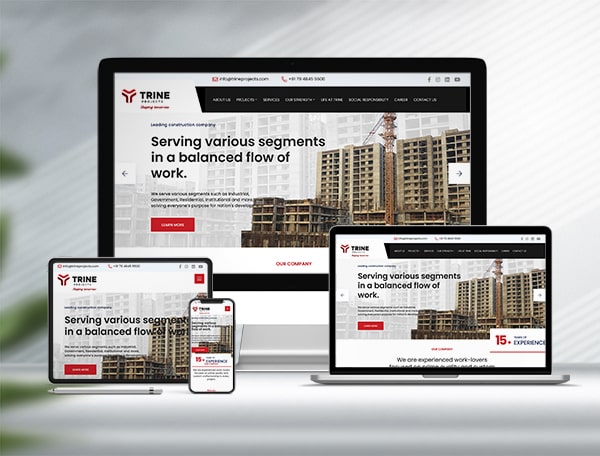
Visitors should be able to find what they came for within two or three clicks, no more. Keep your main menu simple, group related pages logically, and make your calls-to-action obvious rather than buried. And since most website traffic today comes from phones, your site has to look and work just as well on a small screen as it does on a desktop. Responsive design is not optional anymore; it is the baseline every website, and every visitor, judges you against, and Google ranks mobile-friendliness as a factor in its own right.
A dependable web development company in India will handle all of this together — web design, development, component setup, and ongoing customization — because that is what actually makes a website perform for your business, not just look good in a screenshot. None of these pieces work well in isolation; they need to be planned together from the first wireframe. Contact us at Kumbh Design, Inc. for Web Design, WordPress Web Development, Web Promotion and Creative Graphic Design Services built around what your business actually needs.
An SEO friendly website design gets the basics right on every page: a clear H1 and H2 heading structure, a unique title tag and meta description, fast load times, and a layout that works well on mobile. Search engines reward sites that make this information easy to read and easy to crawl.
Schema markup helps search engines understand exactly what a page is about, whether it's a product, a service, or your business details. This can help your listing show extra information directly in search results, like pricing or ratings, which improves click-through rates and is often skipped by competitors.
Yes. Google uses page speed and mobile usability as ranking factors, and slow or hard-to-use-on-mobile sites tend to lose visitors before they even see your content. A responsive, fast-loading website design isn't just good UX, it directly supports better search rankings.